
In cryptocurrency, you are your own bank. This freedom comes with a great responsibility: securing your assets. While trading on a secure platform like HIBT is a critical first step, true asset protection involves understanding the difference between hot and cold storage and mastering the art of the backup. For investors in Vietnam and across the globe, a proper HIBT cold wallet backup strategy is not just a recommendation; it is the ultimate safeguard for your digital wealth.
This comprehensive guide will explain what a cold wallet backup is, why it is essential, and how you can implement a robust backup plan. Whether you are a beginner taking your first steps into crypto or a seasoned trader, this information is vital for long-term security.
Hot vs. Cold Wallets: Understanding the Fundamentals
To grasp the importance of a cold wallet backup, you first need to understand the two main types of cryptocurrency wallets: hot wallets and cold wallets.
Hot Wallets: The Everyday Account
A hot wallet is any cryptocurrency wallet that is connected to the internet. This includes:
- Exchange Wallets: Like the one you use on the HIBT platform for active trading.
- Web-Based Wallets: Accessed through a browser.
- Mobile & Desktop Wallets: Software applications on your phone or computer.
Pros:
- Convenience: Fast and easy to access for trading, sending, and receiving crypto.
- User-Friendly: Generally simple to set up and use, perfect for beginners.
Cons:
- Vulnerability: Because they are always online, they are a potential target for hackers, malware, and phishing attacks.
Hot wallets are like your everyday checking account. You keep a practical amount of funds in it for daily transactions, but you would not store your life savings there.
Cold Wallets: The Secure Vault
A cold wallet, or cold storage, is a cryptocurrency wallet that is not connected to the internet. The private keys—the "password" that gives you ownership of your crypto—are stored offline. This makes them immune to online hacking attempts.
Types of cold wallets include:
- Hardware Wallets: Small physical devices (like a USB drive) that store your private keys offline. Examples include Ledger and Trezor.
- Paper Wallets: A piece of paper with your public and private keys printed on it, often as QR codes.
- Air-Gapped Computers: A computer that has never been and will never be connected to the internet, used exclusively for signing transactions.
Pros:
- Maximum Security: The gold standard for protecting digital assets from online threats.
- Full Control: You, and only you, hold the private keys.
Cons:
- Less Convenient: Accessing funds requires physical possession of the wallet and a more involved process.
- Risk of Physical Loss/Damage: If you lose the device or paper, you could lose your funds forever—unless you have a backup.
Cold wallets are your savings vault. They are for storing the majority of your cryptocurrency that you do not plan to trade frequently.
The Critical Role of the HIBT Cold Wallet Backup
So, what happens if your hardware wallet breaks, is lost, or gets stolen? What if your paper wallet is destroyed in a fire or flood? This is where the HIBT cold wallet backup strategy becomes the most important part of your security plan.
When you first set up a new cold wallet, you are given a recovery phrase (also called a seed phrase or mnemonic phrase). This is typically a list of 12 to 24 random words. This phrase is the master key to all the private keys in your wallet. With this phrase, you can restore your entire wallet and all its funds on a new device.
Your recovery phrase is your backup. Protecting it is just as important as protecting the cold wallet itself.
Case Study: The Costly Mistake of a Da Nang Entrepreneur
Consider the story of Bao, an early crypto adopter from Da Nang. In 2017, he invested a significant sum into Bitcoin and stored it on a new hardware wallet. He wrote down the 24-word recovery phrase on a single piece of paper and put it in his desk drawer.
For years, his investment grew. During a move to a new office, the small piece of paper was accidentally thrown away. A few months later, his hardware wallet suffered a firmware failure and became inaccessible. Without the recovery phrase, he had no way to restore his wallet on a new device. His entire crypto fortune, now worth millions of dollars, was lost forever.
Bao's story is a harsh lesson. He had a cold wallet, but he had no backup strategy. A single, poorly stored copy of his recovery phrase was a single point of failure.
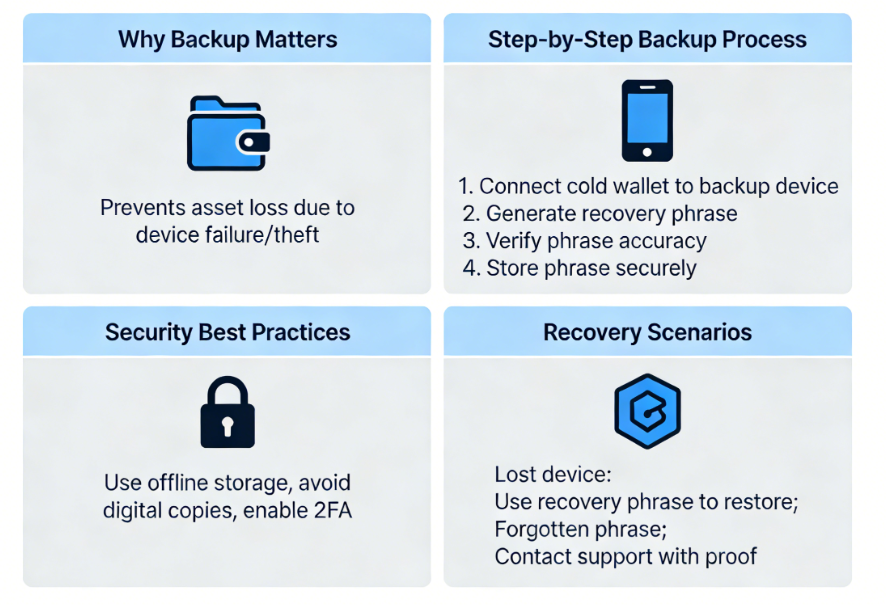
How to Create a Secure HIBT Cold Wallet Backup: Step-by-Step
Creating a robust backup for your recovery phrase requires careful planning. Do not rush this process. Your goal is to create a system that protects against theft, loss, and physical damage.
Step 1: Generate Your Recovery Phrase Offline
When setting up your hardware or software wallet, ensure you are in a private, secure location. No cameras, no open windows, and no one watching. Disconnect from the internet if you are setting up a software wallet for the first time. Write down the recovery phrase on paper.
Action: Never type your recovery phrase into a computer, smartphone, or any digital device. Do not take a picture of it or store it in a password manager. It must remain offline, always.
Step 2: Choose Your Backup Medium
Paper is a good start, but it is vulnerable to fire and water. For long-term security, consider more durable materials.
- Metal Plate Backup: Several companies offer kits that allow you to stamp or engrave your recovery phrase onto small, fireproof, and corrosion-resistant metal plates. This is a highly recommended method.
- Laminated Paper: A simple upgrade to protect against water damage and fading.
- Multiple Paper Copies: If using paper, create at least two or three identical copies.
Step 3: Implement Geographic Redundancy
Never store all your backups in one location. This protects you from localized disasters like a house fire, flood, or burglary.
Action: Distribute your backups across multiple secure locations.
- Location 1: Your Home: In a fireproof safe.
- Location 2: A Trusted Family Member's Home: Choose someone you trust implicitly, like a parent or sibling, and store a copy in their safe.
- Location 3: A Bank Safe Deposit Box: This offers professional-grade security against theft and environmental damage.
Distributing backups ensures that if one location is compromised, you can still recover your assets from another. For more advanced strategies, you can split your seed phrase using a method like Shamir's Secret Sharing, but this adds complexity and is generally for very large holdings.
Step 4: Secure Each Backup Location
Simply placing your backup in a location is not enough.
- Use Tamper-Evident Bags: These bags will show if someone has opened them, alerting you to a potential security breach.
- Use Obscure Language (Optional): Some advanced users write their seed phrase in a code or another language they know to add a layer of obscurity. However, this adds the risk of you forgetting the code.
- Never Label the Backup: Do not write "Crypto Recovery Phrase" or "Bitcoin" on the envelope. Use an innocuous label or no label at all.
Integrating HIBT with Your Cold Storage Strategy
Your HIBT account is your gateway to the crypto market. It is the perfect place for active trading and managing a portion of your portfolio. Your cold wallet is for long-term holding ("HODLing").
A typical workflow for a Vietnamese investor might look like this:
- Buy Crypto: Use local payment methods on HIBT to easily purchase Bitcoin, Ethereum, or other cryptocurrencies.
- Trade Actively: Keep the funds you need for short-term trading within your secure HIBT hot wallet.
- Secure Profits: When you accumulate significant profits or assets you plan to hold for the long term, transfer them from your HIBT account to your personal cold wallet's public address.
- Verify & Backup: Double-check that the funds have arrived in your cold wallet. Ensure your recovery phrase backup system is secure and up-to-date.
This hybrid model gives you the best of both worlds: the liquidity and convenience of an exchange hot wallet and the unparalleled security of offline cold storage.
Case Study: The Smart Investor from Ho Chi Minh City
Let's contrast Bao's story with that of Linh, a savvy tech professional in Ho Chi Minh City. Linh also invested in crypto but took a different approach to security.
- Wallet Setup: She purchased a hardware wallet and set it up in her private home office.
- Backup Creation: She stamped her 24-word recovery phrase onto two separate steel plates.
- Storage:
- Plate 1: She sealed it in a tamper-evident bag and placed it in a fireproof safe in her apartment.
- Plate 2: She gave the second sealed plate to her parents in a different city to store in their home safe.
- Digital Decoy: She created an encrypted text file on her laptop with a fake 24-word phrase. If a hacker ever accessed her computer, they would find a worthless phrase.
One year, Linh's apartment building had a small fire. While her unit was mostly undamaged, the water from the sprinklers destroyed many of her documents. Her fireproof safe protected the first steel plate backup. Even if it had failed, she knew she had a second, pristine copy hundreds of kilometers away. Linh’s strategy protected her from both digital and physical threats.
Advanced Backup Considerations
For advanced users and those with very large portfolios, consider these additional measures.
Multi-Signature (Multisig) Wallets
A multisig wallet requires more than one key to authorize a transaction. For example, a "2-of-3" multisig wallet requires two out of three private keys to sign a transaction. You could store these three keys on three different devices in three different locations. This provides extreme security against theft, as an attacker would need to compromise multiple locations.
Estate Planning
What happens to your crypto if something happens to you? Without a plan, your assets could be lost forever. Your cold wallet backup is a core part of your digital estate plan.
Action: Create a sealed letter of instruction for your chosen heir. This letter should explain:
- What cryptocurrency is and how much you have.
- The locations of your backup recovery phrases.
- Instructions on how to access and manage the funds.
Store this letter with your legal will or with a trusted lawyer. Do not include the actual recovery phrases in the will itself, as wills often become public record.
Your Security Is Your Sovereignty
In the world of cryptocurrency, the phrase "Not your keys, not your coins" is law. While using a trusted exchange like HIBT is essential for market participation, taking self-custody of your long-term investments is the final step toward true financial sovereignty.
An effective HIBT cold wallet backup plan is the foundation of that sovereignty. It is the system that ensures that no matter what happens—theft, accident, or disaster—your digital wealth remains yours.
Take the time to build your security fortress today. Plan your backup strategy, invest in durable materials, and distribute your recovery phrases. It is the most important investment you will ever make in your crypto journey.
About the Author
Dr. Anya Sharma is an internationally recognized expert in applied cryptography and decentralized systems. With over 40 published papers on digital asset security, she is a frequent consultant for financial institutions entering the blockchain space. Dr. Sharma was the lead auditor for the "Titan" protocol, a global cross-chain settlement project renowned for its security architecture.