
After U.S. digital asset market structure legislation hit a roadblock in the Senate, controversy surrounding President Donald Trump’s cryptocurrency interests persists. On September 23, Patrick Witt, White House Digital Assets Advisor, defended Trump’s crypto ties at the Georgetown University Conference on the Quality of Financial Markets and argued that Democrats are politicizing the issue. The conference agenda released by Georgetown University shows Witt participated in an open panel discussion on digital asset policy that day.
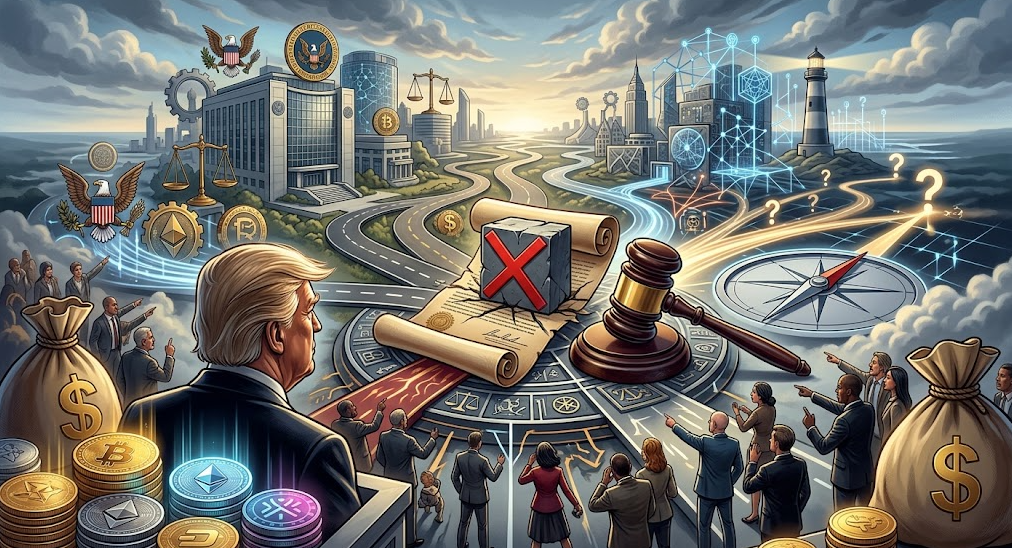
The controversy drew widespread attention because Trump’s personal and family crypto business interests have become a major point of division in negotiations over the CLARITY Act. The bill originally aimed to establish a regulatory framework for the U.S. digital asset market, yet as bipartisan talks advanced, government ethics, conflicts of interest and stablecoin yields moved to the heart of discussions.
The controversy drew widespread attention because Trump’s personal and family crypto business interests have become a major point of division in negotiations over the CLARITY Act. The bill originally aimed to establish a regulatory framework for the U.S. digital asset market, yet as bipartisan talks advanced, government ethics, conflicts of interest and stablecoin yields moved to the heart of discussions.
I. Why Have Trump’s Crypto Interests Become the Focal Point of the CLARITY Act Debate?
The core objective of the CLARITY Act is to build clearer regulatory rules for America’s digital asset market and resolve the division of federal regulatory authority over different digital asset activities.
Nevertheless, during the bill’s advancement, Democratic lawmakers expanded scrutiny to cover digital asset holdings of senior government officials. They warn that if the president and other senior officials hold or operate crypto-related commercial ventures simultaneously, this could create conflicts of interest between personal business activities and the formulation of national digital asset policy.
Accordingly, some Democratic legislators have demanded stricter ethical restrictions be inserted into the bill governing crypto asset ownership, issuance and related commercial benefits.
This issue has become an unavoidable sticking point in legislative negotiations.
II. What Crypto Interest Restrictions Has the White House Accepted?
In response to Democrats’ ethics demands, Witt stated the Trump administration has made concessions during negotiations.
Witt said Trump agreed to two what he described as “unprecedented” ethical arrangements. One provision requires the president to divest certain crypto assets or place them in a blind trust subject to qualifying conditions.
In addition, the negotiation proposal would grant state attorneys general certain law enforcement powers. Where federal government ethics rules apply to digital asset activities, state authorities may gain the ability to take legal action against related violations.
These proposals were part of efforts to secure bipartisan backing. Previous public reporting also indicated restrictions on digital asset interests for government officials were central to the final phase of negotiations.
It should be noted these are arrangements proposed or accepted during bill negotiations and are not fully enacted federal law.
III. Why Do Democrats and the White House Disagree on Conflicts of Interest?
The core dispute is not merely whether Trump owns crypto assets, but how much separation should exist between a president’s personal commercial interests and regulatory authority.
Democrats maintain that where public officials stand to gain potential financial benefits from policies they help draft or advance, explicit ethical guardrails must be put in place to mitigate conflict-of-interest risks.
Witt offered a contrasting interpretation. He argued Democrats overemphasize Trump’s crypto interests and turn the matter into a political fight.
During the September 23 public event, Witt drew comparisons with other areas of financial regulation to illustrate that potential conflicts between lawmakers or government officials and financial assets are not unique to the crypto sector.
Therefore, the real disagreement between the two sides extends beyond Trump’s individual crypto holdings; it centers on defining the boundary between government ethics rules, conflicts of interest and digital asset regulation.
IV. What Does the 49–50 Vote on September 15 Signify?
The CLARITY Act failed to garner sufficient support in a Senate procedural vote on September 15, with a tally of 49 yeas and 50 nays, short of the 60-vote threshold required to advance most legislation. Reuters reported four Republican senators joined Democrats in voting no.
It is critical to distinguish that this was a procedural vote to move the bill forward for further consideration, not a final up-or-down vote on the full bill text.
Thus, “the CLARITY Act failed to advance” is not equivalent to “the CLARITY Act has been formally repealed.”
Reuters also noted Senator Thom Tillis switched his vote during procedural maneuvering, preserving the possibility of reintroducing the measure for reconsideration at a later date.
Still, from a practical legislative standpoint, the vote introduced substantial uncertainty for the bill’s prospects.
V. Why Are Stablecoin Yields Another Major Point of Dispute?
Beyond Trump’s crypto interests, stablecoins represent another contentious topic in CLARITY Act negotiations.
Witt said this week lobbying by large banks shaped the relevant restrictions. He argued some banks worry stablecoin reward or yield mechanisms compete with traditional bank deposit products and erode deposit bases, especially for community banks.
The competitive dynamic between stablecoins and bank deposits has indeed become a key theme in U.S. digital asset regulatory debates.
That said, Witt’s account of bank lobbying’s impact on negotiations reflects his own interpretation of the process. Banks and industry groups’ specific stances on stablecoin yields, deposit competition and financial stability risks should be assessed against their own public statements.
Trump’s crypto interests and stablecoin yields therefore represent two separate lines of contention in CLARITY Act talks: the former centers on government ethics and conflicts of interest, while the latter concerns competition between the banking system and digital asset businesses.
VI. After the CLARITY Act Hits a Snag, What Roles Will the SEC and CFTC Play?
A pause in congressional legislation does not mean U.S. digital asset regulation has halted.
Witt stated this week the White House is now prioritizing actions federal regulators can take rather than waiting for Congress to pass comprehensive market structure legislation immediately. He added the lame-duck congressional session at year-end is not the primary focus of current work.
Against this backdrop, the jurisdiction of the U.S. Securities and Exchange Commission (SEC) and the Commodity Futures Trading Commission (CFTC) will attract greater scrutiny.
If Congress temporarily cannot pass full market structure legislation, regulators retain authority under existing statutes to shape digital asset markets via rulemaking, policy guidance and enforcement actions.
This is a key shift for market watchers following the CLARITY Act setback: the path for U.S. crypto regulation may temporarily shift from congressional lawmaking to administrative oversight.
VII. What Should Be Monitored Next for the CLARITY Act?
The core regulatory issues addressed by the CLARITY Act have not disappeared because of the failed Senate procedural vote.
Recent negotiations reveal at least three issues will continue to shape U.S. digital asset regulation.
First, whether ethical limits on public officials’ ownership and involvement in crypto businesses remain a condition for bipartisan talks.
Second, whether a new balance can be struck between stablecoin yield structures and competition with traditional bank deposits.
Third, whether the SEC and CFTC can move forward with digital asset policies using existing regulatory authority while congressional legislation stalls.
At the same time, it remains uncertain whether Congress will revive market structure legislation. Reuters previously reported that while the procedural vote fell short of the 60-vote requirement, the measure could be revisited in the future.
VIII. How Will the Controversy Over Trump’s Crypto Interests Shape U.S. Digital Asset Regulation?
As seen in the negotiation process, Trump’s crypto commercial interests have evolved into a major political and ethical issue beyond the CLARITY Act itself.
For America’s crypto industry, market participants care less about a single Senate vote and more about what final digital asset regulatory framework the U.S. will adopt, and how regulatory power will be split between regulators and Congress going forward.
The CLARITY Act’s failure to advance introduces fresh uncertainty for comprehensive market-structure legislation, but it does not end the U.S. digital asset policy agenda.
In the near term, SEC and CFTC enforcement actions, stablecoin policy and ethics restrictions for government officials will be key areas to track. Over the longer term, the trajectory of U.S. digital asset regulation will hinge on whether Congress reopens market-structure legislative talks and whether the two parties can forge new consensus around conflicts of interest and banking concerns.
For investors and crypto industry participants, the critical takeaway is not simply watching whether the CLARITY Act returns for another vote, but observing how regulatory authority continues to shift and contest between Congress, the SEC and the CFTC.