
The cryptocurrency market is undergoing an important transition from early freewheeling development to institutionalized regulation. As Bitcoin, Ethereum, stablecoins, and tokenized assets gradually enter the traditional financial system, governments are beginning to re-examine the legal nature, trading rules, and risk management approaches for digital assets. Among these, changes in US cryptocurrency regulatory policy are of particular interest to global trading platforms, institutional investors, and blockchain enterprises.
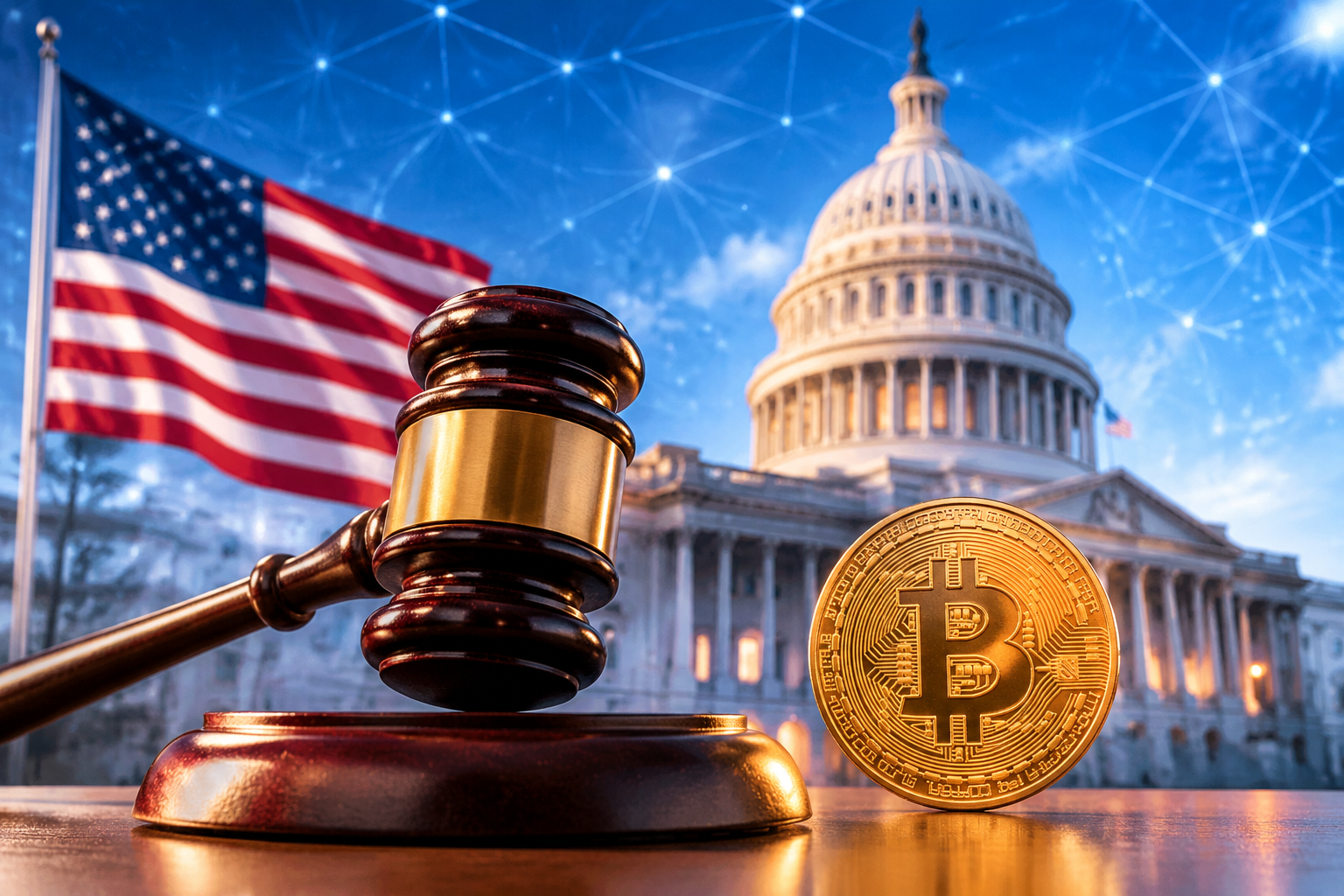
In November 2026, the US midterm elections changed the political landscape of Congress, with the Democratic Party gaining control of both the Senate and the House of Representatives, putting the previously high-profile Digital Asset Market Clarity Act (CLARITY Act) under greater legislative uncertainty. This change not only affects the future of the US digital asset market but also reflects how cryptocurrency regulation is shifting from a simple discussion of industry access to more complex market structure, investor protection, and financial risk governance.
For the cryptocurrency market, regulatory policy is no longer just a legal discussion but an important factor affecting trading platform operations, asset issuance, and institutional participation.
I. Why Is Crypto Regulation Becoming Increasingly Important?
In the early days of cryptocurrency development, the market was mainly driven by individual investors, blockchain developers, and early trading platforms. Because digital assets are characterized by cross-border transactions, 24/7 operation, and decentralization, traditional financial regulatory systems are difficult to apply directly to all crypto businesses.
As the industry scaled up, new problems gradually emerged in the market. For example, should different digital assets be classified as securities or commodities? What financial regulatory requirements must trading platforms comply with? Do stablecoin issuers need to meet bank-level reserve and disclosure standards? And who should be responsible for regulating decentralized finance protocols?
These questions directly affect the rights and obligations of market participants.
The importance of US cryptocurrency regulation is mainly reflected in three aspects.
First, clarifying the legal nature of digital assets helps reduce the jurisdictional uncertainty that enterprises face among different regulatory agencies.
Second, improving rules for trading platforms and asset issuance can increase market transparency and reduce risks such as fraud, market manipulation, and misappropriation of assets.
Finally, a clear regulatory framework can help traditional financial institutions assess the legal costs of participating in the crypto market, creating a more stable environment for institutional investment and blockchain financial applications.
Therefore, Crypto Regulation has become an important factor affecting the long-term development of the cryptocurrency industry.
II. Which Agencies Are Responsible for US Cryptocurrency Regulation?
US cryptocurrency regulation is not carried out by a single agency but involves multiple federal regulatory departments. Among them, the US Securities and Exchange Commission (SEC) and the US Commodity Futures Trading Commission (CFTC) are the two most important agencies in digital asset regulatory discussions.
The SEC is primarily responsible for securities market regulation. If a digital asset or related investment arrangement meets the securities identification standards under US securities law, it may be subject to SEC regulation. This means that relevant issuers, trading platforms, and intermediaries may need to fulfill registration, disclosure, and other securities compliance obligations.
The CFTC is primarily responsible for commodity derivatives market regulation, including futures and certain derivatives trading. For digital assets recognized as commodities, their derivatives trading typically involves CFTC regulatory authority.
The problem is that not all cryptocurrencies can be simply classified as securities or commodities. Different tokens differ in issuance methods, economic attributes, use cases, and trading arrangements, making the regulatory boundary between the SEC and the CFTC a long-standing focus of industry discussion.
For cryptocurrency trading platforms, unclear regulatory jurisdiction may increase business compliance costs and also affect product launches, trading services, and market expansion plans.
III. Why Has the CLARITY Act Become the Focus of US Crypto Regulation?
The CLARITY Act, namely the Digital Asset Market Clarity Act, is an important legislative attempt by the United States in recent years to promote the construction of a digital asset regulatory framework.
One of the core objectives of the bill is to clarify the responsibilities of different regulatory agencies in the digital asset market and establish clearer legal rules for digital asset trading, issuance, and related intermediary businesses.
For a long time, the US crypto industry has hoped to resolve the regulatory jurisdiction dispute between the SEC and the CFTC through legislation. For trading platforms, clear regulatory boundaries help determine which set of legal requirements their business should comply with; for investors, clearer market rules also help improve information transparency and protection levels.
However, the CLARITY Act did not advance smoothly as the industry expected.
In September 2026, the bill failed to pass the Senate procedural vote to proceed with debate. Subsequently, the US midterm elections concluded on November 3, with the Democratic Party gaining control of both chambers of Congress, further changing the political environment for the bill's subsequent advancement.
As of November 6, 2026, the bill still faces significant uncertainty. The new Congress is expected to begin operating on January 3, 2027. If the current Congress fails to complete the legislative process before the end of its term, the bill may need to be resubmitted.
This means that even if the US crypto industry still hopes to establish unified market structure rules, the original legislative plan may face modification, renegotiation, or even a re-legislative process.
IV. How Will US Political Changes Affect Cryptocurrency Regulation?
US cryptocurrency regulation is not only affected by financial market demand but is also closely related to congressional composition, party positions, and regulatory agency personnel arrangements.
After the Democratic Party gained control of both chambers of Congress, future regulatory discussions may focus more on consumer protection, anti-money laundering, conflicts of interest, and disclosure obligations for crypto companies.
This does not mean that the United States will completely ban cryptocurrency business, nor does it mean that all legislation supporting the crypto industry will stop. In fact, attitudes toward digital assets within the two US parties are not entirely consistent, and some Democratic lawmakers have previously supported related crypto market legislation.
The real change is that future bills may need to find a new balance between market innovation and regulatory constraints.
For example, stablecoin issuers may face stricter reserve management and transparency requirements; trading platforms may need to further improve customer asset protection and risk control mechanisms; and businesses involving tokenized stocks may also face stricter securities regulatory review.
In addition, congressional oversight of the SEC and CFTC may also change. The rules, policy interpretations, and enforcement priorities that regulatory agencies develop in the future may all become objects of market attention.
Therefore, investors should not judge market prospects solely based on whether a particular party supports cryptocurrency but should focus on how specific legal provisions and regulatory policies are implemented.
V. How Will Changes in Cryptocurrency Regulation Affect the Market?
Changes in US regulatory policy may affect the cryptocurrency industry through multiple channels.
First, compliance costs for trading platforms may rise. If regulators further clarify the operational requirements for trading platforms, companies will need to invest more resources in customer identity verification, anti-money laundering, asset custody, and transaction monitoring. For overseas platforms hoping to enter the US market, compliance capability will become an important competitive factor.
Second, the stablecoin industry may usher in a clearer development environment. Stablecoins have become important infrastructure for cryptocurrency trading, cross-border payments, and on-chain finance. The US GENIUS Act established a federal regulatory framework for payment stablecoins, and its implementation will provide issuers with a clearer legal basis. However, policy issues worth watching remain regarding stablecoin rewards, reserve assets, and regulation of issuing entities.
Third, the development of tokenized assets may be affected by regulatory boundaries. Traditional financial assets such as stocks, bonds, and funds are exploring issuance and trading through blockchain. Tokenization can improve asset transfer efficiency, but it does not automatically change the legal nature of the underlying assets. Related products still need to consider requirements such as securities issuance, trading venues, and investor protection.
Fourth, institutional investors may place greater emphasis on regulatory certainty. Banks, asset management companies, and traditional financial institutions usually need to consider legal risks, custody security, and internal compliance requirements when entering the crypto market. The clearer the regulatory rules, the easier it is for institutions to formulate long-term business plans.
Therefore, regulatory policy may increase short-term operating costs but may also establish a more mature market foundation for the industry.
VI. What Should Be Watched in Future US Cryptocurrency Regulation?
In the long run, the development of US cryptocurrency regulation will not depend solely on whether the CLARITY Act passes but also requires attention to several important directions.
First is whether the regulatory jurisdiction of the SEC and CFTC can be further clarified. This will directly affect the classification of digital assets, regulatory requirements for trading platforms, and the development of the derivatives market.
Second is the actual implementation of stablecoin regulation. As stablecoins expand their application in payments and financial settlement, issuers' reserve quality, redemption mechanisms, and information disclosure will become important observation indicators.
Third is the regulatory issue of decentralized finance (DeFi). DeFi protocols are open and cross-border, and how traditional financial regulatory models apply to protocol developers, operators, and service providers remains controversial.
Finally, there is whether the United States can form a digital asset legislative framework with bipartisan support. If future regulatory policy can balance financial innovation, consumer rights, and market stability, the US digital asset industry may still have the opportunity to gain a clearer development environment.
For investors and enterprises, understanding these policy changes is more important than simply focusing on the short-term progress of a single bill.
Conclusion
US cryptocurrency regulation is entering a new phase of policy adjustment. The legislative resistance faced by the CLARITY Act reflects that political and institutional disagreements remain over the rules of the digital asset market.
However, this does not mean that the development of the crypto industry will stagnate as a result. Stablecoins, tokenized assets, and institutional digital asset services can still continue to develop under the existing legal framework, but different businesses need to face different regulatory requirements.
In the future, competition in the cryptocurrency market will depend not only on technology, liquidity, and product innovation but will also increasingly rely on compliance capability and regulatory adaptability. For enterprises and investors participating in the digital asset market over the long term, continuously monitoring US regulatory policy and its actual implementation will help them better understand industry changes and potential risks.
Frequently Asked Questions (FAQ)
Q1. What is cryptocurrency regulation (Crypto Regulation)?
A: Cryptocurrency regulation refers to the laws and rules formulated by governments and financial regulatory agencies for digital asset issuance, trading, custody, payments, and related financial services, mainly involving market transparency, investor protection, and financial risk management.
Q2. Which agencies in the United States mainly regulate cryptocurrency?
A: The United States mainly involves the SEC and the CFTC. The SEC is responsible for securities market regulation, and the CFTC is responsible for commodity derivatives market regulation. Which agency regulates a specific digital asset needs to be determined based on the nature of the asset and related trading activities.
Q3. What impact does the CLARITY Act have on the cryptocurrency market?
A: The CLARITY Act aims to clarify the regulatory framework and agency responsibilities of the digital asset market. If it is passed in the future, it will help reduce uncertainty regarding regulatory jurisdiction and affect compliance requirements for trading platforms, digital asset issuers, and market participants.
Q4. Will stronger US cryptocurrency regulation affect the price of Bitcoin?
A: Regulatory policy may indirectly affect the price of Bitcoin by influencing market sentiment, institutional participation, and trading activity, but the price is also affected by factors such as the macroeconomy, market liquidity, capital flows, and investor demand. Price trends cannot be judged based on regulatory policy alone.