
As blockchain technology gradually enters traditional financial markets, stock tokenization is becoming a new direction of interest for financial institutions. From the New York Stock Exchange (NYSE) planning to launch a tokenized securities trading platform, to Nasdaq exploring stock tokenization infrastructure, to the Depository Trust & Clearing Corporation (DTCC) launching securities tokenization services, the traditional financial industry is attempting to use blockchain to change how stocks are issued, traded, settled, and custodied.
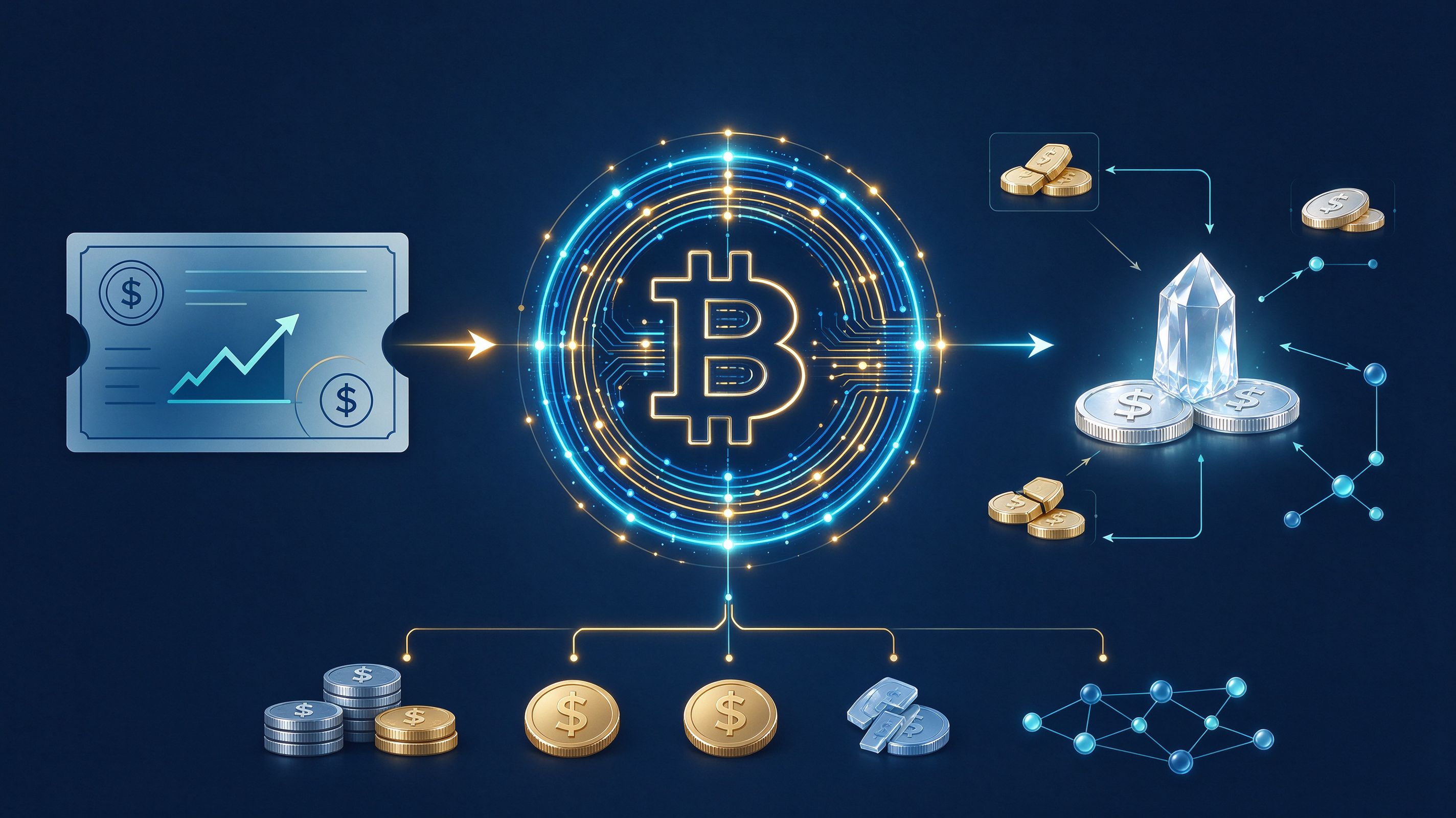
On November 9, 2026, the New York Stock Exchange announced that it had selected Avalanche as the core ledger technology for its affiliated tokenized securities trading platform, providing trade records and settlement support for the relevant clearing institution. The platform plans to support round-the-clock trading and settlement, but still requires regulatory approval. This development has once again made stock tokenization a focus of attention in both traditional finance and the cryptocurrency market.
What exactly is stock tokenization? How does it differ from traditional stock trading? And what changes can blockchain bring to investors and financial institutions?
I. What Is Stock Tokenization?
Stock tokenization refers to the use of blockchain technology to represent stocks or related securities rights in the form of digital tokens, and to record their issuance, holding, and transfer information through a distributed ledger.
Simply put, traditional stocks are usually registered and settled through securities accounts, central securities depositories, and financial intermediary systems, whereas tokenized stocks can transfer part of the ownership records and trading processes onto a blockchain network.
Each token can represent all or part of the economic rights of a specific stock, and may also represent a rights certificate linked to a traditional security. However, the rights granted to holders under different tokenization models are not entirely the same.
Currently, there are mainly two models of stock tokenization:
The first is issuer-led tokenization. A listed company or an authorized institution issues or records traditional securities in token form, establishing a legal and technical link between the token and the real securities rights.
The second is third-party-led tokenization. A third-party institution issues tokens linked to traditional stocks through holding, custody, or other arrangements. What investors hold may be the relevant economic rights or contractual claims, and they do not necessarily directly own shares in the issuing company.
Therefore, investors cannot assume that they have shareholder rights identical to those of traditional stocks simply because a token's name contains the stock ticker of a listed company.
In its January 2026 statement on tokenized securities, the U.S. Securities and Exchange Commission (SEC) also distinguished tokenized securities into different types, such as issuer-led and third-party-led, and emphasized the need to determine their legal nature and holder rights based on the specific structure.
II. How Does Stock Tokenization Work?
Stock tokenization is not simply converting a stock ticker into digital currency; it requires the coordination of multiple links, including issuance, registration, trading, clearing, and custody.
Its basic process can be divided into the following steps:
- Asset issuance and rights confirmation: The issuer or relevant institution determines the stocks to be tokenized and clarifies the securities rights corresponding to the tokens, the issuance quantity, and the legal relationships.
- Blockchain token issuance: Digital tokens representing the relevant securities rights are created through smart contracts, and issuance and holding information is recorded.
- Investor trading: Investors who meet the platform's participation conditions can buy and sell the relevant assets through trading platforms that support tokenized securities.
- Clearing and settlement: After a trade is completed, the system updates the relevant asset and fund records according to the trading rules, and some processes can be automatically executed through smart contracts.
- Asset custody and rights management: The relevant institutions are responsible for asset safekeeping, holder records, and the handling of rights such as dividends and corporate actions.
Among these, clearing and settlement are important links in stock tokenization.
Traditional stock trading usually requires multiple financial institutions to coordinate trade confirmation, asset delivery, and fund transfer. Blockchain can record transaction status through a shared ledger and use smart contracts to execute preset rules, thereby reducing some information verification and manual processing links.
However, on-chain records do not mean that all legal registration, fund payment, and regulatory processes will be completed automatically; the specifics still depend on the platform architecture and applicable law.
III. What Are the Advantages of Stock Tokenization?
Stock tokenization has attracted the attention of traditional financial institutions mainly because it has the potential to improve the trading and settlement efficiency of the existing securities market.
1.Improve trading and settlement efficiency
Trading hours in the traditional stock market are limited by exchange operating hours, and after a trade is executed, it still needs to go through clearing and settlement processes. Blockchain technology can enable some trading and settlement links to be completed faster, reducing information transmission and reconciliation work between different institutions.
If a trading platform can achieve near-real-time settlement, investors have the opportunity to complete asset delivery and use of funds more quickly. However, the actual settlement speed still depends on platform rules, liquidity, and regulatory requirements.
2.Support round-the-clock trading
Traditional stock trading usually operates according to the times stipulated by exchanges, whereas blockchain networks can continuously process transactions and ledger updates.
Therefore, stock tokenization platforms have the opportunity to support round-the-clock trading, allowing investors in different regions to participate in trading that complies with platform rules even while traditional markets are closed.
It should be noted that 24-hour trading does not mean that there is sufficient buy-side and sell-side liquidity at all times, nor does it mean that the traditional stock market has fully shifted to round-the-clock trading.
3.Reduce some operating costs
Traditional securities trading involves multiple participants, including brokers, clearing institutions, custodian institutions, and transfer agents. Through shared ledgers and smart contracts, some asset registration, trade confirmation, and settlement processes are expected to be automated, reducing duplicate verification and manual operations.
However, tokenization platforms still need to bear costs such as technology maintenance, compliance review, asset custody, and cybersecurity, so it cannot simply be assumed that stock tokenization is necessarily cheaper than traditional securities trading.
4.Improve asset circulation capacity
Blockchain can connect different financial applications and digital asset ecosystems, providing more digital circulation channels for securities assets.
If compatible technical standards and compliance mechanisms are established between different platforms, tokenized securities may in the future circulate within a broader financial infrastructure, improving asset utilization efficiency.
IV. Why Did NYSE Choose Avalanche?
On November 9, 2026, the New York Stock Exchange selected Avalanche to provide core ledger technology for its affiliated tokenized securities trading platform, a decision that reflects traditional financial institutions' further exploration of blockchain infrastructure.
According to information published by Ava Labs, Avalanche will provide core ledger technology for the clearing institution behind the platform, to be used for recording and settling trades.
It is worth noting that this does not mean the New York Stock Exchange will directly use the Avalanche public blockchain to complete all stock trading.
According to relevant reports, NYSE plans to build a customized blockchain based on Avalanche technology to meet the platform's requirements in terms of trading performance, participant permissions, operating costs, and regulation.
Avalanche is a platform that supports enterprises in building customized blockchain networks. Through infrastructure such as Ava Cloud, enterprises can set network operating rules and access permissions according to their own business needs.
The significance of this cooperation is mainly reflected in three aspects:
First, traditional stock exchanges are beginning to apply blockchain to core infrastructure such as clearing and settlement, not just to issuing digital assets.
Second, Avalanche's enterprise-grade blockchain technology has attracted the attention of large financial market participants, helping to expand its application scenarios in the real-world assets (RWA) field.
Finally, the platform plans to support stocks from multiple blockchain networks while using Avalanche technology as the trade record and settlement ledger. This indicates that the future tokenized securities market may adopt a multi-chain collaboration model, rather than a single blockchain handling all business.
V. How Are NYSE, Nasdaq, and DTCC Positioning Themselves?
Stock tokenization is not an attempt by the New York Stock Exchange alone. Multiple important participants in the traditional financial market are building related infrastructure, but their business priorities differ.
New York Stock Exchange (NYSE)
NYSE plans to support tokenized securities trading through an affiliated trading platform, combining the existing Pillar trading engine with blockchain clearing, settlement, and custody infrastructure.
Its goals include round-the-clock trading, fast settlement, and support for stablecoin funding arrangements. Avalanche mainly plays the role of core ledger technology for the relevant clearing institution.
Nasdaq
Nasdaq is also advancing its stock tokenization plan, focusing on how to digitize stocks under the existing securities regulatory framework while preserving issuers' control over shareholder rights and corporate governance.
In March 2026, Nasdaq announced a new design direction for stock tokenization, planning to promote the connection between tokenized stocks and existing securities market infrastructure.
DTCC
The Depository Trust & Clearing Corporation (DTCC) is an important custody and settlement infrastructure institution in the U.S. securities market.
On October 28, 2026, DTCC officially launched its tokenization service, enabling eligible users to convert the securities rights they hold in custody into tokenized form and to convert between the traditional securities and digital asset environments.
Unlike NYSE, which focuses on trading platforms, DTCC's focus is on securities custody, asset transfer, and collateral liquidity management.
These different directions indicate that stock tokenization is gradually developing from single-project exploration into infrastructure construction involving exchanges, custodian institutions, and fintech companies.
VI. What Risks Does Stock Tokenization Face?
Although stock tokenization has certain development potential, it still faces legal, technical, and market challenges.
1.Regulatory and ownership issues
Stocks are regulated financial securities, and tokenization will not automatically change their securities nature.
Different countries and regions have different regulations on securities issuance, trading, custody, and investor protection. Investors need to understand whether there is a real security behind the token, who custodies it, and whether holders can legally receive dividends and other shareholder rights.
2.Smart contracts and cybersecurity
Stock tokenization relies on smart contracts and blockchain infrastructure. Once a contract has a vulnerability, incorrect permission settings, or the network suffers an attack, asset transfer and trade records may be affected.
Therefore, platforms need to establish strict code auditing, permission management, and security monitoring mechanisms.
3.Liquidity and price differences
Tokenized stocks do not necessarily have the same market depth as traditional stocks.
If there are fewer trading participants, bid-ask spreads may widen, and token prices may deviate from the market prices of the corresponding stocks. Asset liquidity between different trading platforms may also not be directly interoperable.
4.Custody and investor rights
Investors also need to pay attention to the division of responsibilities among token issuers, custodian institutions, and trading platforms.
If tokens issued by a third party are merely linked to stock prices without granting direct shareholder rights, the risks borne by investors may differ from those of directly holding traditional stocks. Therefore, before participating in related trading, one should carefully read the issuance documents, custody arrangements, and redemption rules.
VII. Will Stock Tokenization Become a New Direction for Traditional Finance?
From NYSE's selection of Avalanche, to Nasdaq advancing stock tokenization design, to DTCC launching securities tokenization services, the traditional financial market has begun to explore the practical application of blockchain technology from different levels.
In the future, the development focus of stock tokenization may not only be extended trading hours, but also securities issuance methods, cross-platform asset transfer, settlement efficiency, collateral management, and connections between global digital asset markets.
However, for stock tokenization to achieve large-scale application, it still needs to address issues such as regulatory coordination, investor protection, liquidity, custody responsibility, and technical standards.
For the cryptocurrency industry, this trend is also of great significance. Blockchain's application scenarios are gradually extending from cryptocurrency-native trading to traditional securities and real-world asset fields, and RWA may become an important bridge connecting traditional finance and digital asset markets.
Overall, stock tokenization is not intended to immediately replace the traditional stock market, but rather to try to use blockchain to improve existing financial infrastructure. As exchanges, custodian institutions, and regulators continue to participate, the integration between traditional finance and cryptocurrency may further deepen in the future.