
The global financial landscape is undergoing a seismic shift, and at its epicenter is the Web3 market. For investors and innovators in Vietnam, this new digital frontier represents an unprecedented wave of opportunity. The conversation is moving from traditional assets to the dynamic, decentralized world of cryptocurrencies, NFTs, and blockchain-based applications. But how do you navigate this complex and often volatile market?
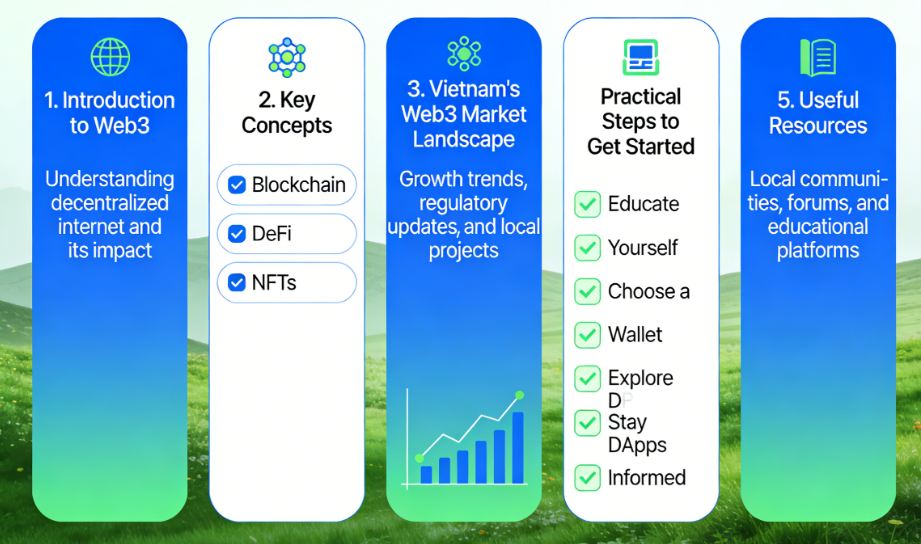
This guide is designed to be your comprehensive resource for understanding and succeeding in the Web3 market. Whether you are a beginner looking to make your first investment, a seasoned trader aiming to refine your strategy, or simply curious about the future of finance, you will find the answers here. We will break down the core concepts, outline actionable steps, and show you how to leverage powerful, secure platforms like HIBT to achieve your financial goals.
What is the Web3 Market and Why Does it Matter?
Before diving into the "how," it is crucial to understand the "what." The Web3 market is the economic ecosystem built on the principles of Web3—the next evolution of the internet.
From Web2 to Web3: A New Economic Model
Web1 was the "read-only" internet of static web pages. Web2, the internet we use today, is the "read-write" web, dominated by centralized platforms like social media and e-commerce giants. In this model, corporations own your data and control the value you create.
The Web3 market operates on the "read-write-own" principle. It is built on decentralized blockchain technology, which means that control is distributed among users, not held by a single entity. In this market, you own your digital assets—whether it's a cryptocurrency, a piece of digital art (NFT), or a token that gives you a vote in a project's future. This fundamental shift towards user ownership is what gives the Web3 market its revolutionary potential.
The Web3 Market Opportunity in Vietnam
Vietnam is not just a participant in the Web3 market; it's a global leader. With its young, tech-savvy population and high mobile adoption rates, the nation has consistently ranked among the top countries for cryptocurrency adoption. For Vietnamese investors, the Web3 market offers a direct pathway to the global economy, bypassing traditional financial intermediaries. It provides opportunities for high-yield returns, borderless transactions, and participation in innovative new technologies.
Step 1: Foundational Knowledge and Risk Management
The first and most important investment you can make in the Web3 market is in your education. The potential for high rewards is matched by significant risks, and knowledge is your best defense.
The Golden Rule: Do Your Own Research (DYOR)
You will see this acronym everywhere: DYOR. It means you should never invest in a project based on hype, a celebrity endorsement, or a tip from a friend. You must perform your own due diligence.
When evaluating a project in the Web3 market, consider the following:
- The Whitepaper: Does the project have a detailed document explaining its purpose, technology, and the problem it solves? Is the vision clear and achievable?
- The Team: Who is behind the project? Are they public with a proven track record in technology or finance? While anonymous teams can be legitimate, they carry a higher degree of risk.
- Tokenomics: This is the economics of the project's token. What is its total supply? How is it distributed? Is there a clear use case for the token within the ecosystem (utility), or is it purely speculative?
- Community: Is there an active, engaged community discussing the project's technology and progress? A vibrant community is often a strong indicator of a project's long-term potential.
Understanding Market Volatility
The Web3 market is famously volatile. Prices can swing dramatically in a matter of hours. This volatility is a double-edged sword: it creates opportunities for significant gains but also poses the risk of substantial losses.
A core principle of navigating this market is to never invest more than you can afford to lose. This isn't just a saying; it's a critical survival strategy. If you are new, start with a small allocation of your portfolio and only increase your investment as your knowledge and comfort level grow.
Step 2: Choosing Your Platform – The Gateway to the Market
To enter the Web3 market, you need a reliable gateway to convert your fiat currency (Vietnamese Dong) into digital assets. This is typically a centralized cryptocurrency exchange. The platform you choose is one of the most important decisions you will make.
Security: Your Top Priority
The history of the Web3 market is littered with tales of exchange hacks and lost funds. Choosing a platform with institutional-grade security is non-negotiable. HIBT provides top-tier security with advanced encryption technology and multi-layer risk controls, ensuring every transaction is fully protected. Whether it's your assets or personal data, we prioritize security to give you peace of mind with every trade. Look for platforms that use cold storage (keeping assets offline) and multi-signature wallets.
User Experience and Tools
The Web3 market can be complex, but your trading platform shouldn't be. A confusing interface can lead to costly errors. We are committed to building a simple and intuitive trading platform, making it easy for both beginners and experienced traders to navigate. From a clean interface to powerful trading tools, HIBT ensures that every user can manage and trade digital assets effortlessly.
A Diverse Marketplace
As you become more comfortable, you will want to explore different corners of the Web3 market, from major cryptocurrencies like Bitcoin and Ethereum to promising new altcoins in DeFi and GameFi. A good exchange offers a wide variety of trading pairs and high liquidity, which ensures you can buy and sell assets quickly without causing significant price slippage.
Step 3: Mastering the Different Sectors of the Web3 Market
The Web3 market is not a single entity. It's a collection of diverse and interconnected sectors, each with its own risks and rewards. Smart investors understand these differences and diversify their portfolios accordingly.
Sector 1: The Foundation - Layer 1 and Layer 2 Blockchains
Layer 1s are the foundational blockchains upon which the entire Web3 market is built. Think of them as the operating systems.
- Examples: Bitcoin (BTC), Ethereum (ETH), Solana (SOL), Cardano (ADA).
- Investment Thesis: Investing in a Layer 1 is a bet on the growth of its entire ecosystem. If you believe more developers and users will build on and use a particular blockchain, then its native token is likely to appreciate in value.
- Layer 2s: These are solutions built on top of Layer 1s to improve scalability and reduce transaction fees. Examples include Polygon (MATIC) and Arbitrum (ARB) for Ethereum. Investing in Layer 2s is a bet on the continued dominance of the underlying Layer 1.
Sector 2: Decentralized Finance (DeFi)
DeFi aims to recreate the entire traditional financial system—lending, borrowing, trading, insurance—on the blockchain, without intermediaries.
- Examples: Decentralized Exchanges (DEXs) like Uniswap (UNI), lending protocols like Aave (AAVE), and liquid staking protocols like Lido (LDO).
- Investment Thesis: DeFi offers investors the opportunity to put their assets to work. You can earn yield by providing liquidity to a DEX, lending out your assets, or staking tokens. The risk here is primarily technical, related to potential bugs in smart contracts.
Case Study: Earning Yield in the DeFi Market
An investor in Ho Chi Minh City holds some Ethereum but wants to earn a return on it rather than just letting it sit in a wallet. They use a lending protocol on a DeFi platform. They deposit their ETH into a lending pool, and other users can borrow it by providing collateral. In return, the investor earns interest, paid out in ETH, at a rate determined by supply and demand. This allows them to generate passive income from their holdings.
Sector 3: GameFi and the Metaverse
GameFi (Gaming + Finance) is a sector where Vietnam has emerged as a global leader. It involves games where players can earn real-world value through NFTs and in-game tokens (the "Play-to-Earn" model).
- Examples: Axie Infinity (AXS), The Sandbox (SAND), Decentraland (MANA).
- Investment Thesis: GameFi represents a massive onboarding ramp for new users into the Web3 market. An investment in a GameFi token is a bet on the game's ability to attract and retain a large player base and create a sustainable in-game economy. The metaverse is the broader vision of persistent, interconnected virtual worlds where these games and other social experiences will take place.
Sector 4: NFTs and Digital Culture
Non-Fungible Tokens (NFTs) are unique digital certificates of ownership recorded on a blockchain. While often associated with digital art, they can represent ownership of almost anything, from music and collectibles to event tickets and real-world assets.
- Investment Thesis: Investing in NFTs is more akin to investing in art or collectibles than traditional finance. It is highly speculative and driven by culture, community, and perceived rarity. This sector is high-risk but can offer exponential rewards.
Step 4: How to Formulate Your Investment Strategy
Navigating the Web3 market without a strategy is like sailing without a compass. Your strategy should be based on your risk tolerance, time horizon, and financial goals.
Strategy 1: The Core-Satellite Approach (For Balanced Investors)
This is a popular portfolio construction strategy.
- Core: The majority of your portfolio (e.g., 60-70%) is invested in established, "blue-chip" cryptocurrencies like Bitcoin (BTC) and Ethereum (ETH). These are considered the safest assets in the Web3 market and form a stable foundation.
- Satellites: The remainder of your portfolio (30-40%) is allocated to higher-risk, higher-reward assets from sectors like DeFi, GameFi, or smaller Layer 1s. This allows you to capture upside potential while limiting your overall risk.
Strategy 2: Dollar-Cost Averaging (DCA) (For Beginners)
Trying to "time the market"—buying at the absolute bottom and selling at the top—is nearly impossible. DCA is a disciplined approach that removes emotion from investing. You invest a fixed amount of money at regular intervals (e.g., weekly or monthly), regardless of the price.
- How it works: When the price is high, you buy fewer units. When the price is low, you buy more. Over time, this averages out your purchase price and reduces the impact of volatility. This is an excellent strategy for building a long-term position in your core holdings.
Strategy 3: Active Trading (For Experienced Investors)
For those with a deeper understanding of market dynamics and technical analysis, active trading can be a profitable strategy. This involves shorter-term trades based on market trends and price patterns.
- Spot Trading: Buying and selling the actual cryptocurrencies.
- Futures Trading: Speculating on the future price of an asset without owning it. This allows you to use leverage and profit from both rising (going long) and falling (going short) markets.
HIBT offers a variety of cryptocurrency trading options, including spot trading, futures contracts, and margin trading, allowing you to adapt to market fluctuations and seize more investment opportunities. Whatever your trading strategy is, we have the solution for you. However, active trading, especially with leverage, carries significant risk and is only recommended for experienced traders.
Step 5: Essential Security Practices in the Web3 Market
The freedom and decentralization of the Web3 market come with the responsibility of self-custody and security. Scammers are constantly developing new methods to target uninformed users.
Protecting Your Assets
- Use Strong, Unique Passwords: Use a password manager to create and store complex passwords for every platform.
- Enable Two-Factor Authentication (2FA): Always use an authenticator app (like Google Authenticator) for 2FA. Avoid using SMS-based 2FA, as it is vulnerable to SIM-swapping attacks.
- Beware of Phishing: Scammers create fake websites that mimic legitimate exchanges to steal your login details. Always double-check the URL and bookmark trusted sites like
https.hibt.com. Never click on suspicious links from emails or social media messages.
Securing Your Web3 Wallet
When you interact with DeFi or NFTs, you will use a non-custodial wallet (like MetaMask or Phantom). You are the sole custodian of the assets in this wallet.
- Guard Your Seed Phrase: Your 12 or 24-word seed phrase is the master key to your wallet. Write it down on paper and store it in a secure, offline location. Never store it digitally or share it with anyone. If you lose it, your funds are gone forever.
Step 6: The Importance of Localized Support and Community
Navigating the Web3 market can be daunting, especially when technical issues arise. Having access to support in your native language can make a significant difference. As a platform deeply embedded in the Vietnamese market, HIBT understands the local needs and provides tailored support. Our customer service team is available 24/7 to assist you, and we offer convenient payment methods to ensure a seamless trading experience. Connecting with local communities, both online and offline, is also a great way to stay informed about market trends and opportunities specific to Vietnam.
Conclusion: Your Journey in the Web3 Market Starts Now
The Web3 market is more than just a new way to invest; it's a chance to be part of the next generation of the internet. For investors in Vietnam, it offers a gateway to financial innovation and global opportunity. Success in this dynamic environment requires a combination of continuous education, disciplined strategy, and a relentless focus on security.
Remember these key steps for your journey:
- Build Your Knowledge: Continuously research projects and understand the different market sectors.
- Choose a Secure Platform: Partner with a trusted exchange that prioritizes the safety of your assets.
- Develop a Clear Strategy: Define your goals and risk tolerance, and stick to your plan.
- Practice Rigorous Security: Protect your accounts and your private keys at all times.
The decentralized future is here, and the tools to participate are at your fingertips. Take control of your financial journey and explore the immense potential of the Web3 market.
To start your journey with a secure and user-friendly platform, visit HIBT today and discover a world of trading opportunities.
About the Author
Dr. Pham Van Binh
PhD in Cryptographic Systems, Principal Researcher in Blockchain Scalability
Dr. Pham Van Binh is a renowned expert in blockchain technology and decentralized systems. He obtained his PhD in Cryptographic Systems from the Posts and Telecommunications Institute of Technology in Hanoi and completed his post-doctoral fellowship at the National University of Singapore, where his research on Layer 2 scaling solutions gained international recognition.
Dr. Binh has authored over 35 peer-reviewed papers on topics ranging from consensus mechanisms to zero-knowledge proofs. He was the lead security auditor for the "Project Phoenix" consortium, a major cross-border payments initiative in Southeast Asia, securing over $2 billion in transaction value. He currently advises several venture capital firms on their Web3 investment strategies and is a vocal advocate for user education and security best practices in the digital asset space.