
Bitcoin (BTC) has been one of the most closely watched assets in the cryptocurrency space since its inception. Over the past few years, many investors have habitually compared the movements of Bitcoin and the stock market, trying to identify a correlation between them. However, despite both Bitcoin and the stock market exhibiting significant volatility, their price movements do not always align. This lack of synchronization has sparked curiosity among many investors: why doesn’t Bitcoin’s price move in tandem with stock prices?
In this article, we will explore the relationship between Bitcoin’s price movement and the stock market, analyze the reasons behind their lack of synchronization, and discuss the implications of this phenomenon for investors.
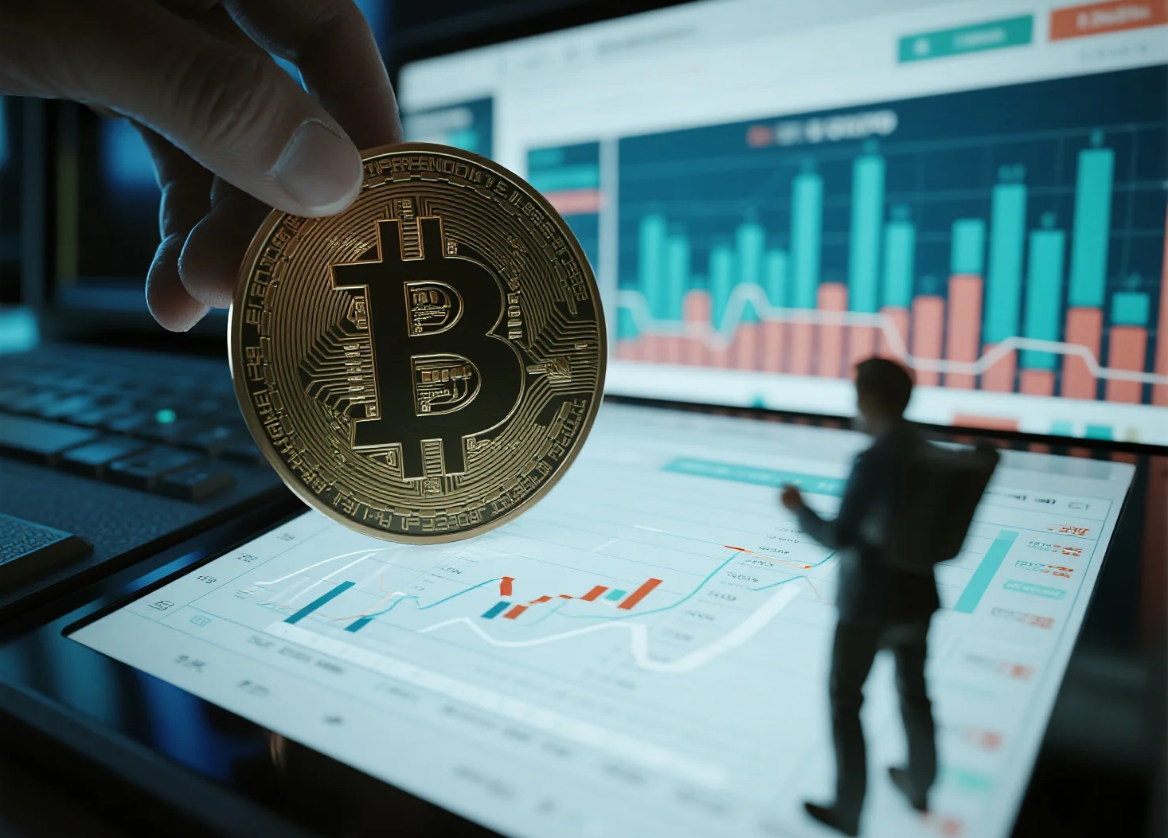
1. Different Market Mechanisms for Bitcoin and Stocks
While both Bitcoin and stocks are assets in the financial market, their market mechanisms are fundamentally different. The stock market is driven by the performance of publicly listed companies and the market demand for their stocks, while Bitcoin, as a decentralized digital asset, is not dependent on any company’s financial health or profitability. Instead, Bitcoin’s price is influenced by several factors:
- Market Sentiment: Bitcoin’s price is often driven by investor sentiment, especially the influence of macroeconomic and policy changes on market psychology.
- Supply and Demand: The supply of Bitcoin is fixed (with a maximum supply of 21 million), and its supply decreases over time through halving events that occur approximately every four years. This supply limitation makes Bitcoin more susceptible to fluctuations in market demand.
- Decentralization and Policy Factors: Unlike stocks, Bitcoin is not directly affected by traditional financial market regulations or government oversight. Its decentralized nature allows it to experience greater freedom in price fluctuations.
In contrast, the stock market is more closely related to factors such as company performance, financial reports, market outlook, and macroeconomic elements like interest rates and monetary policies. The differences in trading mechanisms and investment logic between Bitcoin and the stock market are important reasons why their price movements do not always align.
2. Bitcoin’s Higher Volatility
Bitcoin typically exhibits much higher volatility compared to traditional stock markets. In most cases, Bitcoin’s price increases and decreases far exceed the average fluctuations seen in the stock market. This high volatility makes Bitcoin a high-risk, high-reward asset and contributes to its performance diverging from the stock market.
For example, in March 2020, during the global stock market crash triggered by the COVID-19 pandemic, Bitcoin also experienced a sharp decline, with its price dropping from around $10,000 in January to approximately $4,000 by the end of March. However, while the stock market took a considerably longer time to recover, Bitcoin bounced back quickly in the second half of 2020 and reached a historic high above $60,000 in 2021.
Moreover, the Bitcoin market has relatively lower trading volumes and market depth, which means that large buy and sell orders can have a more significant impact on Bitcoin’s price. The stock market, with its stronger liquidity and large investor base, typically does not experience price movements as extreme as Bitcoin.
3. The Impact of Macroeconomic Environment on the Correlation Between Bitcoin and Stocks
Although Bitcoin and stock markets generally do not move in sync, they may exhibit some correlation under specific macroeconomic conditions. For example, when the global economy faces significant uncertainty (such as during a financial crisis or monetary policy tightening), both Bitcoin and stock prices may drop simultaneously as investors tend to seek safer assets during times of market uncertainty.
However, in other cases, the relationship between Bitcoin and stocks can be quite different. Bitcoin, as a decentralized asset, may be seen as a safe-haven asset during times of low market liquidity, causing its price to show a negative correlation with traditional stock markets. For instance, during a sharp drop in the stock market, Bitcoin may attract more investors seeking to preserve their wealth due to its decentralized, borderless nature.
Conversely, when the stock market performs strongly and investor sentiment is optimistic, Bitcoin’s price is often also favored, especially when risk appetite increases. In such cases, investors may move some capital out of the traditional stock market and into riskier assets like Bitcoin.
Thus, the relationship between Bitcoin and stocks is often determined by external factors, market sentiment, and changes in macroeconomic policies.
4. Bitcoin’s Decentralized Nature Makes Its Response Different from the Stock Market
Bitcoin’s decentralized and global nature means that its market reactions are typically more independent of traditional stock markets. Stock markets are directly influenced by government regulations, company performance, and financial policies, whereas Bitcoin is not controlled by any single entity, allowing it to respond to market conditions differently.
For example, when the stock market is affected by government policy changes, interest rate fluctuations, or macroeconomic volatility, Bitcoin’s reaction may not be the same. Due to its decentralized nature, Bitcoin tends to be more sensitive to global market liquidity and investor sentiment, with fluctuations that may be more pronounced than those seen in the stock market.
Additionally, unlike stocks, Bitcoin does not generate cash flow or profits. Investors primarily view it based on future expectations and trust in its role as a store of value. Stock investors typically rely on company profits, cash flow, and other metrics to evaluate asset value, while Bitcoin’s value is more determined by supply-demand dynamics, network effects, and macroeconomic factors.
5. Bitcoin’s Role as Digital Gold
Over time, Bitcoin has increasingly been seen as “digital gold.” During times of stock market instability, rising inflation, or currency depreciation, Bitcoin often becomes an investment safe-haven. In such cases, the price movements of Bitcoin and the stock market may become even more decoupled. For example, when the stock market falls due to rising interest rates or economic recession, the demand for Bitcoin as a safe-haven asset may increase, driving up Bitcoin’s price.
However, the concept of Bitcoin as “digital gold” is still evolving. While it can serve as a store of value in certain economic conditions, its price volatility may make it not entirely fit the traditional definition of a safe-haven asset. Therefore, investor trust and demand for Bitcoin are influenced by multiple factors, including macroeconomic conditions, policy changes, and supply-demand dynamics within the Bitcoin market itself.
6. Conclusion: Bitcoin and the Stock Market’s Price Movements Do Not Always Align
Bitcoin and the stock market’s price movements do not always align due to:
- Different Market Mechanisms: The stock market depends on company performance and macroeconomic factors, while Bitcoin relies more on decentralized mechanisms, supply-demand dynamics, and market sentiment.
- Volatility Differences: Bitcoin’s volatility is typically much higher than that of the stock market. Stock price fluctuations are usually driven by company performance and macroeconomic changes, while Bitcoin is more influenced by market sentiment, speculative trading, and macroeconomic events.
- Macroeconomic Environment: The price movements of both Bitcoin and the stock market are affected by macroeconomic conditions and market sentiment, but their responses often differ.
- Decentralized Nature: Bitcoin’s decentralized and global nature means that its price movements are often less influenced by traditional stock market forces.
Therefore, Bitcoin, as a digital asset, may sometimes show price movements that diverge from the stock market, while in other cases, it may follow similar trends. Understanding this dynamic is important for both cryptocurrency and stock market investors.
FAQ
- Will Bitcoin and the Stock Market Have Long-Term Correlation?
- While Bitcoin and the stock market’s price movements do not always align, in some specific macroeconomic conditions, their correlation may strengthen. For example, when market risks rise, investors may shift funds from the stock market to Bitcoin and other safe-haven assets.
- How Does Bitcoin’s Volatility Differ from the Stock Market?
- Bitcoin’s volatility is typically much higher than that of the stock market. Stock price fluctuations are usually driven by company performance and macroeconomic changes, while Bitcoin is more influenced by market sentiment, speculative trading, and macroeconomic events.
- Can Bitcoin Be Considered a Safe-Haven Asset?
- Bitcoin is sometimes seen as digital gold, especially during rising inflation or currency depreciation, when it may become a safe-haven asset. However, Bitcoin’s high volatility and risk make it different from traditional safe-haven assets like gold.
- Why Doesn’t Bitcoin Always Move in Sync with the Stock Market?
- Bitcoin and the stock market differ in their responses to market sentiment, macroeconomic factors, and supply-demand dynamics. Bitcoin, as a decentralized digital asset, is often more influenced by speculative behavior and short-term market sentiment, while stock markets are more driven by company performance and macroeconomic policies.
- How Can I Assess the Relationship Between Bitcoin and the Stock Market?
- Investors can assess the relationship between Bitcoin and the stock market by observing macroeconomic conditions, market sentiment, and market liquidity. For example, when the stock market is performing well, investors may move capital into Bitcoin and other riskier assets, and vice versa during downturns.
About the Author
Luke
Crypto Web3 Growth Operator
Luke has over 10 years of experience in the cryptocurrency market, focusing on market trends, investment strategies, and technical analysis. He specializes in developing practical educational content and strategies for the crypto market, helping both beginners and advanced investors understand the complex relationship between the cryptocurrency and traditional financial markets.
Disclaimer
This article is for market research, industry observation, and educational purposes only. It does not constitute investment advice, financial advice, or trading advice. Cryptocurrency markets are highly volatile and risky, and the prices of related assets may fluctuate dramatically due to macroeconomic events, policy changes, market sentiment, liquidity conditions, project developments, and other unpredictable factors.
The views, judgments, and analyses in this article are based on publicly available data, industry information, and the author's research experience, for reference purposes only. Readers should conduct their own independent judgment and assume responsibility for any investment or trading decisions.
References
- CoinMarketCap – Bitcoin Data: https://coinmarketcap.com/currencies/bitcoin/
- CoinGecko – Bitcoin Market Data: https://www.coingecko.com/en/coins/bitcoin
- Reuters – Bitcoin Market News: https://www.reuters.com/
- Bloomberg – Bitcoin and Financial Market Dynamics: https://www.bloomberg.com/
- TradingView – Bitcoin Price Chart: https://www.tradingview.com/symbols/BTCUSD/
Risk Disclaimer
Cryptocurrency investment is highly volatile and risky. Investors should carefully assess their risk tolerance and financial situation before making any investment decisions.