

Many people still see crypto as one thing:
Crypto = a speculative asset
But in 2026, a much more important shift is happening:
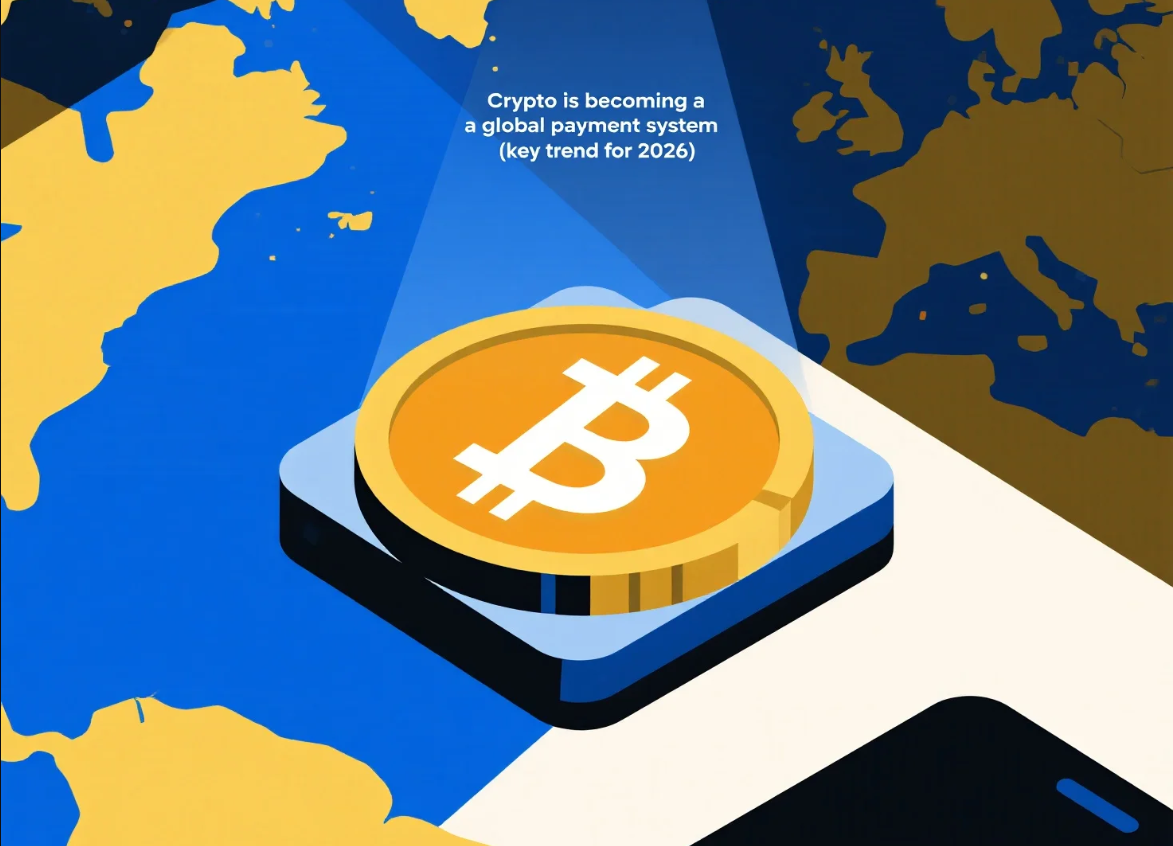
Crypto is evolving into a global payment system
This isn’t a prediction.
It’s already happening.
1. A Reality You May Have Overlooked
Ask yourself:
👉 What’s the fastest way to send money internationally today?
It’s not banks.
It’s:
Stablecoins (USDT / USDC)
More and more people are already using them for:
- Sending money to friends abroad
- Receiving international payments
- Paying for digital services
And they’re not using banking rails.
They’re using:
Blockchain networks
Which means:
Crypto is already functioning as a payment system
2. Why Traditional Payment Systems Are Failing
Let’s look at banks:
🏦 The problems with traditional banking:
- Slow transfers (1–5 days)
- High fees ($20–$100 per transaction)
- Multiple intermediaries
- Restrictions and friction
👉 At its core:
This is an outdated system.
Now compare that to crypto:
⚡ Crypto payments:
- Near-instant settlement
- Low fees ($0.10–$1)
- No intermediaries
- Globally accessible
👉 This isn’t an incremental improvement.
It’s a fundamental upgrade.
3. Stablecoins: The Core of Crypto Payments
If crypto is the system, then stablecoins are:
Digital dollars
The most widely used:
- USDT
- USDC
Why are stablecoins so important?
Because:
Payments require stability
No one wants to pay with an asset that fluctuates 10% in a day.
So naturally:
Stablecoins have become the settlement layer of crypto
4. Three Major Shifts Happening in 2026
1️⃣ Individuals Are Using Crypto for Payments
- Freelancers getting paid globally
- Cross-border transfers
- Digital goods and services
👉 More people are bypassing banks entirely.
2️⃣ Businesses Are Adopting Stablecoins
This is the most important shift.
Examples include:
- Cross-border trade settlements
- SaaS subscriptions
- Web3-native services
👉 In essence:
Stablecoins are entering the global business infrastructure.
3️⃣ Financial Institutions Are Entering the Space
Even more importantly:
Traditional finance is integrating with crypto
- Visa and Mastercard supporting stablecoin payments
- Banks participating in blockchain infrastructure
- Crypto ETFs driving institutional capital inflows
👉 This signals a major shift:
Crypto is no longer fighting the financial system—it’s merging with it.
5. The Real Nature of the Crypto Payment System
Think of it this way:
Traditional finance:
Banks = settlement layer
Crypto:
Stablecoins = settlement layer
The key difference:
From centralized → to decentralized (or semi-centralized)
This is:
A new generation of financial infrastructure
6. Why You Haven’t Fully Felt It Yet
Because we’re still in:
The early stage
It’s similar to the internet in 2005.
You could use it—but it hadn’t reached mass adoption yet.
Once it does:
The shift becomes irreversible.
7. What Opportunities Exist for Individuals?
This is what really matters:
🎯 Opportunity 1: Lower-Cost Transfers
Use stablecoins instead of banks.
🎯 Opportunity 2: Early Access to a New Financial System
Position yourself ahead of the curve.
🎯 Opportunity 3: Information Asymmetry
Most people still don’t understand what’s happening.
👉 The reality:
You’re using the future system while others are still stuck in the old one.
8. Risks and Reality (Important)
Crypto isn’t perfect.
⚠️ Key risks:
- User errors (wrong address, lost funds)
- Regulatory uncertainty
- Platform risks
👉 That’s why choosing the right platform matters.
At HiBT, we focus on one thing:
Helping beginners safely enter the crypto payment ecosystem
Including:
- Transparent costs
- Simple transfer processes
- Risk control guidance
- Beginner-friendly onboarding
👉 The goal isn’t just to help you use crypto—
It’s to help you use it correctly.
9. What Happens Next?
Over the next 3–5 years, expect to see:
- Widespread adoption of stablecoin payments
- Deeper integration between crypto and banks
- The emergence of a digital dollar-based system
👉 The end result:
A complete restructuring of the global payment system
10. Final Thoughts
Remember this:
Crypto is no longer just an asset—it’s becoming infrastructure
From:
A speculative tool
To:
A global payment system
Closing Thought
The internet transformed how information flows.
Crypto is transforming how money flows.
The next era isn’t about whether you’ll use it—
It’s about when you start.