

Many people believe:
“I don’t have enough money to invest in Bitcoin.”
But the reality is:
You don’t need thousands of dollars—$100 is enough to get started.
The real issue isn’t how much money you have.
It’s:
How you start.
This guide will walk you through:
- How to enter the market safely with $100
- The most common beginner mistakes
- How to avoid losing money
1. The Bottom Line: $100 Is Enough
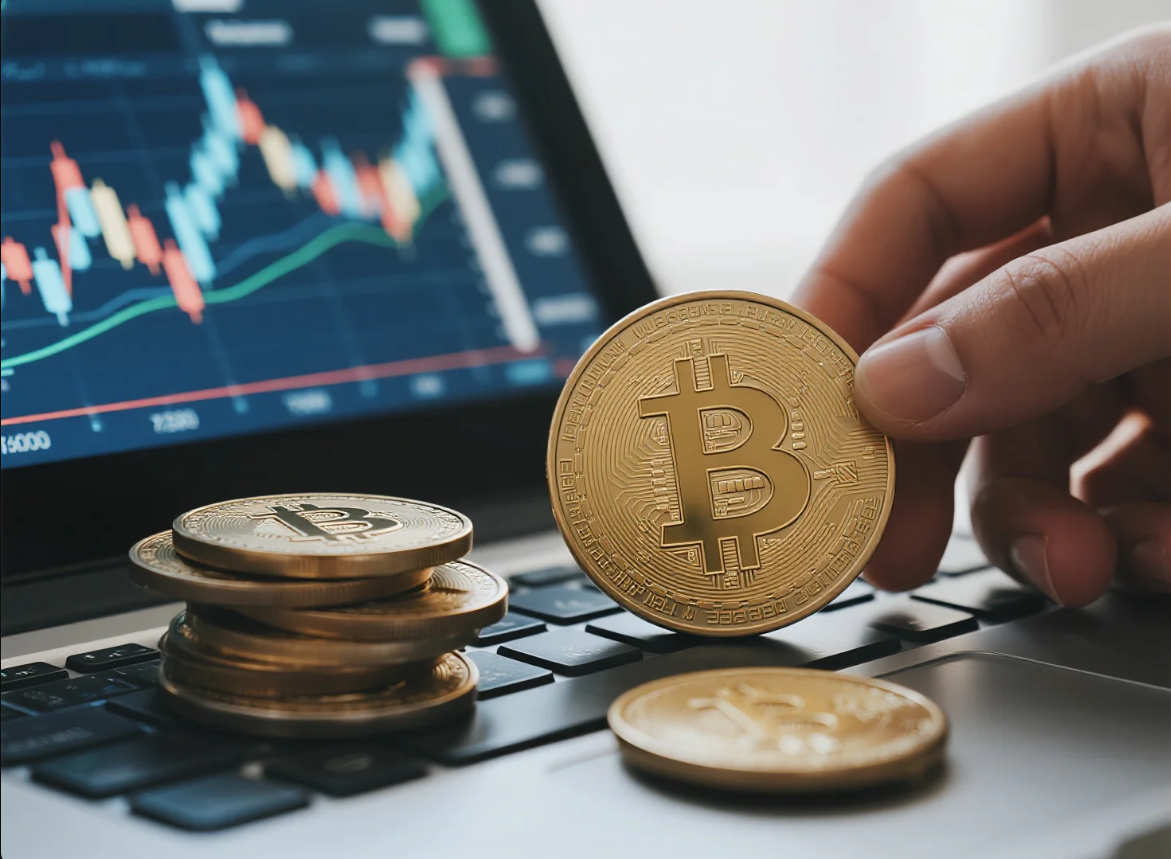
👉 Bitcoin is divisible.
You don’t need to buy 1 BTC.
You can buy:
- 0.001 BTC
- 0.0001 BTC
- Or even smaller amounts
👉 So:
Capital isn’t the limitation—knowledge is.
2. The Right Goal When Starting with $100
Most beginners think:
- “I want to double my money”
- “I want to make quick profits”
But with $100, your real goal should be:
🎯 Learning + building a system
👉 The purpose of this $100 is not to make money.
It’s:
To learn how not to lose money.
3. The Safest Way to Start with $100 (Key Section)
🎯 1. Don’t Buy All at Once (Use Dollar-Cost Averaging)
👉 Recommended approach:
- Split your investment into 3–5 parts
- Invest $20–$30 each time
👉 Benefit:
Avoid buying at short-term peaks
🎯 2. Focus on BTC (Avoid Altcoins)
👉 Why?
- More stable
- Higher liquidity
- Lower risk
👉 Common beginner mistake:
Using $100 to gamble on small altcoins
Result:
Often ends in total loss
🎯 3. Avoid Leverage (Very Important)
Many people think:
“$100 is too small—I’ll use leverage to amplify gains.”
What actually happens:
They get liquidated.
👉 Key rule:
Leverage doesn’t just amplify profits—it amplifies risk.
If you don’t fully understand it:
Stay away.
Why Do You Keep Getting Liquidated?A Beginner’s Guide to Liquidation in Crypto (2026 Edition)
🎯 4. Manage Your Position (Don’t Go All-In)
Recommended:
- Use only 50%–70% of your funds
- Keep some cash for market dips
🎯 5. Reduce Trading Frequency
Don’t trade every day.
Because:
The more you trade, the more you pay.
4. The Most Common Ways Beginners Lose $100
❌ 1. Chasing pumps
👉 Buying after the price goes up
❌ 2. Panic selling
👉 Selling when the price drops
❌ 3. Overtrading
👉 Fees and slippage eat your funds
❌ 4. Using the wrong platform
👉 High hidden costs
👉 The truth:
It’s not about having too little money—it’s about using the wrong approach.
5. Why Most People Can’t Even Grow $100
Because they ignore:
⚠️ Hidden costs:
- Slippage
- Spread
- Fees
👉 These slowly eat away your capital.
Over time, they matter more than price movements.
6. A Smarter Strategy for 2026
🎯 Use Dollar-Cost Averaging (DCA)
👉 Invest a small amount weekly or monthly.
- Don’t try to time the market
- Don’t chase price movements
👉 The principle:
Use time to your advantage
7. The Right Mindset for $100
Don’t think:
“How many times can I multiply this?”
Instead think:
“How do I build skills and avoid losses?”
Because:
If you can protect $100, you can protect $10,000.
8. Key Takeaways
Remember this:
With $100, you’re not trying to make money—you’re learning how to make money.
👉 The 3 most important rules:
1️⃣ Buy in batches (don’t go all-in)
2️⃣ Avoid leverage
3️⃣ Control your costs
👉 If you follow these:
You’re already ahead of 80% of beginners.
FAQ
Q1: Is $100 really worth investing in Bitcoin?
👉 Yes—because it’s your cost of learning.
Q2: How long does it take to make money?
👉 There’s no fixed timeline.
The real goal is:
Avoid losses first.
Q3: Can I trade futures with $100?
👉 Not recommended.
Final Thought
You’re not too broke to invest—you just haven’t started yet.